



We were first introduced to Victory Scents by it’s creator, Gina of Combat Bet, during SHOT Show this year. We’ve worked with her previously on the ITS SHOT Show Poker Chips we’ve handed out the last two years at the show and can’t say enough good things about her, which is why we’re expect nothing less from her new venture with Victory Scents.
How can you not love a morale boosting, politically incorrect twist on air fresheners? We’ve got them up all over ITS HQ, including up at the top of our rope climbs in the warehouse. You’ve got to have something to tag when you get to the top right?
These are coming very soon and are made in the USA too boot! Be on the lookout for news on when they’ll drop on the Victory Scents Facebook Page!
I recently came across an article I’d downloaded from the Emergency Medical Journal online a few years back, entitled “Tourniquet Use in the Civilian Pre-Hospital Setting.”
My reasoning for bringing up this article is to turn it into a discussion and hear others opinions on the topic and hear from our medics out there. To summarize this EMJ article, which I’ve attached here (PDF), it’s focus goes into exploring the potential problems and mistrust of tourniquet use, why civilian pre-hospital tourniquet use may be necessary, define the indications for tourniquet use and provide practical information on tourniquet application and removal.
While I’d highly suggest you read the entire article yourself, I’ve highlighted some bullet points of the article below. All sources of the can be found within the original article. [Read More…]
If you’re not familiar with stippling, or as our friends from Method Burn say, “burning tiny dots into things you love.”
Burning these dots into polymer handgun frames, grips, fore ends, rail panels and even magazines like PMAGs, is typically done using a soldering iron and a lot of patience. Why do this? As the soldering iron burns a dot or other pattern into the polymer, it leaves behind a raised surface that enhances the texture and aids in your ability to “grip” the stippled product.
I’d never been entirely convinced of the effectiveness of stippling, that is until I gave it a shot myself. Here’s my thoughts on what I found when I attempted my first DIY stippling on a set of Sig grips for my P225/P6 and why next time I’ll probably call our friends at Method Burn to use their services! [Read More…]
We’ve mentioned the venerable Mr. Murphy here on a few occasions and today we’d like to provide with the bible of Murphy’s Laws of Combat Operations. While the origin of Murphy’s Law is contested to this day, the version we tend to side with is mentioned on the Murphy’s Law Wikipedia entry:
Arthur Bloch, in the first volume (1977) of his Murphy’s Law, and Other Reasons Why Things Go WRONG series, prints a letter that he received from George E. Nichols, a quality assurance manager with the Jet Propulsion Laboratory. Nichols recalled an event that occurred in 1949 at Edwards Air Force Base, Muroc, California that, according to him, is the origination of Murphy’s law, and first publicly recounted by USAF Col. John Paul Stapp. An excerpt from the letter reads:
The Law’s namesake was Capt. Ed Murphy, a development engineer from Wright Field Aircraft Lab. Frustration with a strap transducer which was malfunctioning due to an error in wiring the strain gage bridges caused him to remark – “If there is any way to do it wrong, he will” – referring to the technician who had wired the bridges at the Lab. I assigned Murphy’s Law to the statement and the associated variations.
Murphy’s always along for the ride no matter if you’re conducting combat operations or living your daily life. If you’re not familiar with him and his antics, you’ve probably just never known he was with you all along. Here’s the list of 113 of Mr. Murphy’s Laws of Combat Operations. [Read More…]
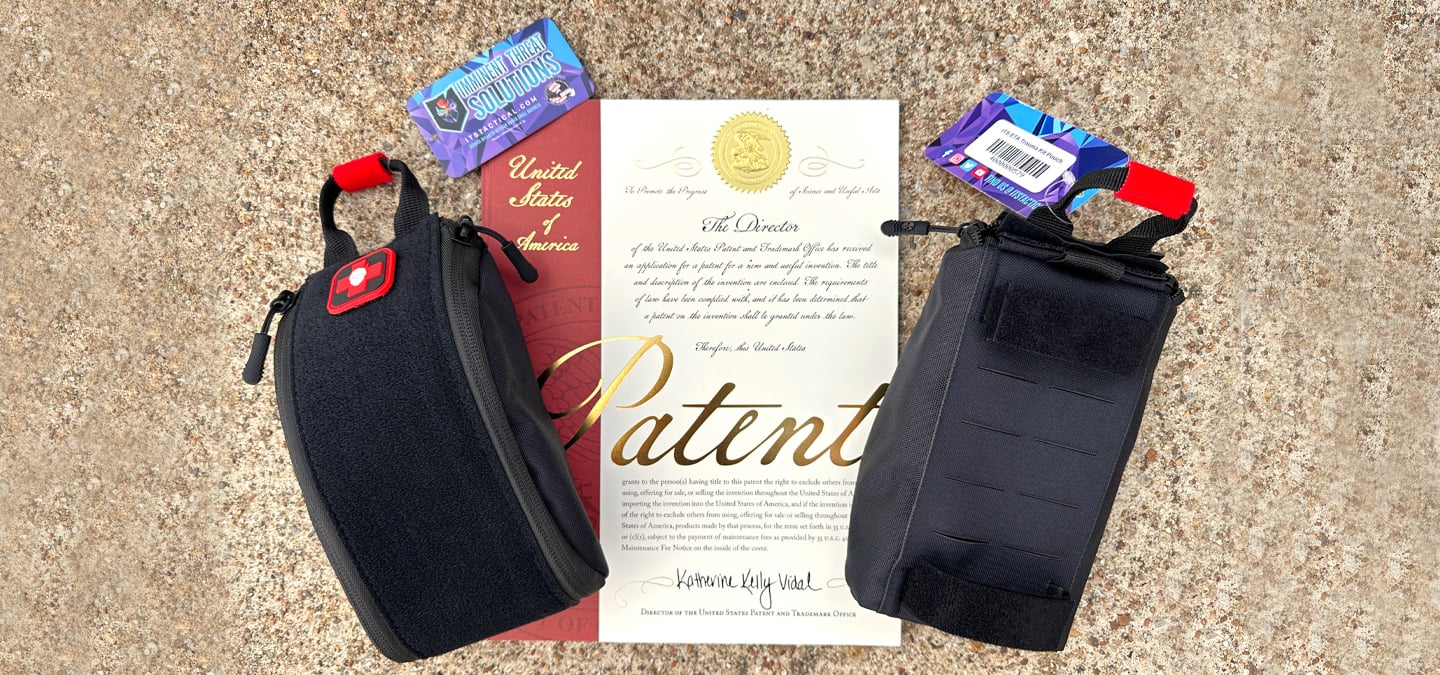
I’ve been testing out Molly Stix for a few months now, ever since the first samples were available from National Molding and I’ve really grown attached to using them on my ETA Trauma Kit Pouches because of the ability to quick release the pouch if necessary. They’re also much easier to thread then other attachment methods.
Molly Stix represent a departure from normal MOLLE/PALS interface attachment systems, like integrated and reinforced nylon strips that are weaved through a pouch’s PALS webbing and a chest rig’s PALS webbing to create a secure attachment. Other products exist on the market for pouches that don’t feature integrated strips, such as Malice Clips like we include with our ETA Trauma Kit Pouches and also Blackhawk Speed Clips.
While Malice Clips can be a pain to install, they’re very secure once locked in. So much so that removing them can equally be a pain. The Blackhawk Speed Clips are interesting, but have their limitations as well. They’re quick to install with their rigid design, but I’ve had them work loose on me before.
Enter the Molly Stix. With a rigid design and locking top latch, a pair of these will not only add a solid locking design to your MOLLE gear, but by tying a pair of these together with the included cordage, a quick release can be implemented to create the fastest one-handed cut away I’ve ever seen. [Read More…]
The Spyderco Dyad Jr. was a small two-bladed folding knife that was introduced for a short period in 1999. Spyderco occasionally produces what they call Sprint Runs; limited productions of previously discontinued knives. When I learned that Spyderco planned to do a Sprint Run of the Dyad Jr. in 2011, it quickly became one of the knives I was most excited for.
I had never handled a Dyad Jr. before, but it looked like it would be a really handy, practical knife, and since there would only be 1,200 made I figured I could always sell it if I didn’t like it. Well, I’ve been using mine every day for the last month, and I can already tell this little gem will be one of my favorites.
What makes this such a great knife is the efficiency of it. In terms of cutting edge per inch of handle, or cutting edge per ounce of knife, the Dyad Jr. cannot be beat. It’s a 1. ounce knife with 4.25” of cutting edge (not just blade length), all in a handle barely over 3”. That’s a hell of lot of cutting power in a very compact, lightweight package. [Read More…]
There are many different flavors of rifle mag pouches out there, flapped, non-flapped, polymer, kydex and even reverse flapped. Before we answer the question of whether the lids from mag pouches get in the way on a reload, let’s talk a bit about retention. It’s impossible to talk about the reason for magazine flaps without mentioning retention.
Retention on mag pouches is either managed by elastic webbing or shock cord in traditional nylon mag pouches that either have no lid, like a shingle, or in pouches with a removable lid taken off. This can be sufficient for most activities that the average shooter finds themselves in while at the range, but when you throw running, climbing or other athletic activities into the mix, magazines can work themselves free and no one wants to loose valuable ammo. Valuable both in terms of cost and especially its value in a real world scenario where each round counts.
The possibility of having mags fall out can be increased when a single mag is absent from a double rifle mag pouch too. In this case, unless you’re running a flapped pouch or doubled up polymer/kydex pouch specifically designed to still retain that other mag, there’s almost no retention still on that mag left in the pouch. A flap on a pouch like this can be re-secured over that single mag to retain it. This may all seem like common sense, but I wanted to go over it for those that may not be familiar with all the options out there for mag pouches and retention. [Read More…]
I wanted to bring everyone’s attention to something I’ve just signed up for. The prestigious Stanford University has recently released a free online cryptography course taught by Professor Dan Boneh of the Stanford Computer Science Department.
This cryptography course is part of Stanford’s new and completely free online Coursera courses. I first heard about the Cryptography course when it was announced back in November of last year and after a few delays, it’s finally available for registration. Actually it was available back on March 6th, but for some reason an email letting me know this was delayed reaching me until today. They state on the registration page that registration closed yesterday, but I was just able to sign up and wanted to pass this info along to anyone who might want to still get enrolled.
Here’s Stanford’s description of the Introduction to Cryptography course: [Read More…]
We don’t follow the political game much here on ITS, but I feel that the Senate bill, S.2188, is an important one to many of our readers like it is to me.
Essentially, the National Right-to-Carry Reciprocity Act of 2012 is the Senate companion to H.R. 822, which was introduced to the U.S. House last November and passed by a vote of 272-154. There’s been some healthy debate on the merits of such an act, which would allow anyone with a valid state-issued concealed firearm permit to carry concealed in any state that issues a concealed firearm permit, or that doesn’t prohibit carrying concealed for lawful purposes.
Much like a driver’s license from one state is valid in another, the Right-to-Carry reciprocity would allow traveling concealed-carry permit holders the same rights to self defense as they have in their home state. [Read More…]
Recent Comments