The relaunched ITS Online Store is live with awesome new products!

From the category archives:

Climbing

exo_fermeWhile perusing the internet we came upon a great video by Rob Curtis of Military Times Gear Scout.

Curtis shot a EXO demonstration video recently at Outdoor Retailer with South Salt Lake Tactical Officer Steve Crandall.

Our jaws were literally on the floor when we saw the Petzl EXO used here in a tactical application. [Read More…]

{ 14 comments }

Learn How To Ascend 15Today we wrap up the last installment of our “Learn How to Ascend” series, with the ascent.

If you’ve just joined us, please take the time to read our other two articles on ascending equipment and setting up an ascent before continuing.

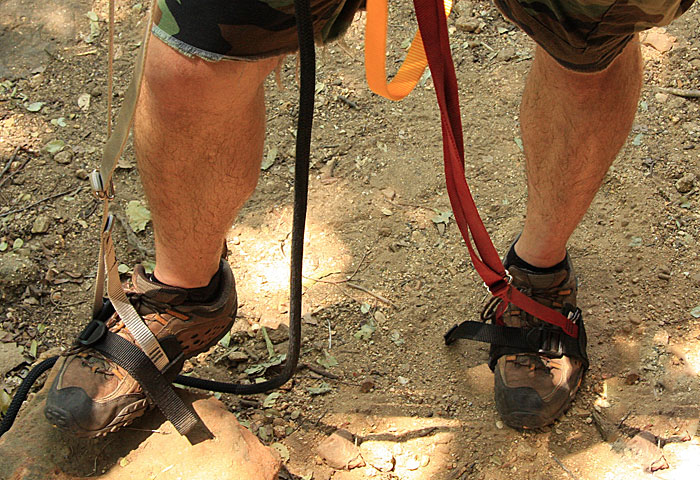
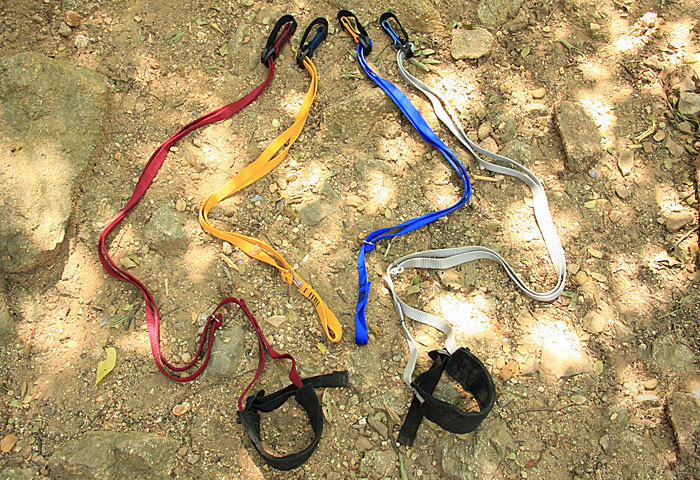
We left off with just having attached our Metolius Easy Aiders to our feet, and preparing to start the ascent. [Read More…]

{ 1 comment }

Learn How to Ascend 06In this article we’ll be putting everything together and show how to connect the ascender setup to the rope.

Ascending is arguably another one of the most dangerous procedures in climbing, so pay attention to your setup because an improper one can get you killed.

The reason it’s one of the most dangerous procedures is the fact that much like rappelling, it forces you to rely on your equipment and anchors 100%. [Read More…]

{ 0 comments }

Learn How to Ascend 01Now that we’ve covered getting down a rock face in our “How to Rappel” series, we’ll look at how to use ascenders to get back up the rope.

Situations that would involve having to ascend back up a rope you’ve just rappelled down, would most likely be in caving, or spelunking, depending on your training level.

Ascenders function much like friction knots, or prusiks, by providing a grip on the rope. With a mechanical ascender, the grip is set with a cam, allowing it to only move in the intended direction of travel (up). [Read More…]

{ 1 comment }

Post image for Learn How to Rappel: Part 3, Descent
3 of 3 in the series How to Rappel

Welcome to the final article of our “Learn How to Rappel” series.

If you’ve just joined us, please take the time to read our other two articles on rappelling equipment and setting up a rappel before continuing.

We left off with throwing the rope over the edge to finish our setup of the fixed rappel. [Read More…]

{ 2 comments }

guinessfastest100mabseil

Copyright © Guinness World Records

We stumbled on a YouTube video not too long ago by Guinness World Records showing the fastest 100m Abseil (or rappel).

The record setting 8:99 seconds by Steve Truglia is impressive nonetheless, but when watching the video, a few things stood out to us as red flags.

First off, in the first picture it shows Truglia suspended over Centre Point Tower in London, which is at least 100 feet away from the building. It’s understandable that he’d be that far away from the building just in case he started swinging on the way down. [Read More…]

{ 1 comment }

Post image for Learn How to Rappel: Part 2, Setup
2 of 3 in the series How to Rappel

Welcome to our second installment of “Learn How to Rappel.” This week we’ll be walking through the setup and attachment of the rappel.

Rappelling is arguably one of the most dangerous procedures in climbing, so pay attention to your setup because an improper setup can get you killed.

The reason it’s one of the most dangerous procedures is the fact that rappelling forces you to rely on your equipment and anchors 100%. [Read More…]

{ 15 comments }

Post image for Learn How to Rappel: Part 1, Equipment
1 of 3 in the series How to Rappel

Rappelling properly and safely is a tremendous skillset to have, and one that we feel deserves it’s own how to series.

Each week we’ll be presenting you with another part of our “Learn How to Rappel” series with photos and YouTube video.

In the first part of our “Learn How to Rappel” series, we’ll be going over the basic equipment needed to set up a rappel. [Read More…]

{ 11 comments }

Bachmann Knot 03The Knot of the Week climbing mini-series ends this week with the Bachmann Knot. Yes, another relative of the Prusik Knot.

Our reason for reviewing so many similar knots is to illustrate the different applications they all have, and Prusik Knots are extremely important in climbing.

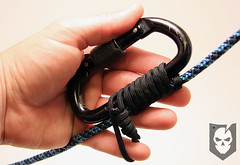
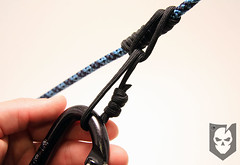
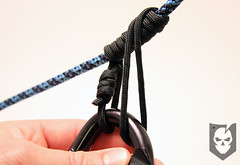
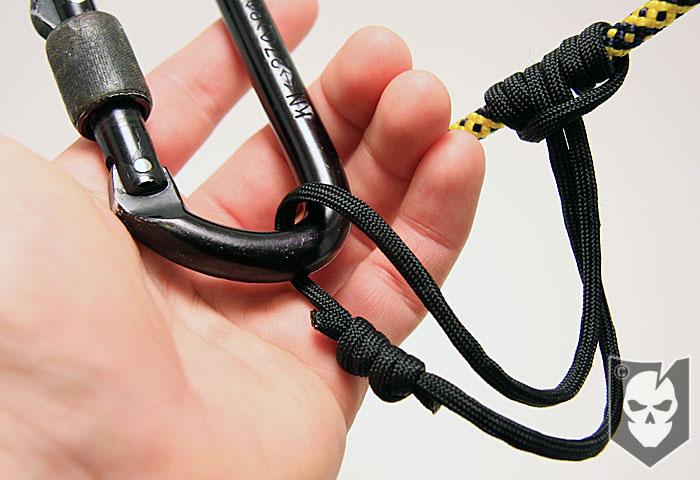
Like the standard Prusik, the Bachmann Knot is a friction hitch, which works by gripping the rope and providing friction to support a climbers weight. The Bachmann’s main characteristic that visually separates it from Prusik Knots, is the use of a Carabiner. [Read More…]

{ 2 comments }

Klemheist Knot 06The Knot of the Week mini-series on climbing knots is coming to a close with only one more week remaining. This week we focus on the Klemheist Knot, another relative of the Prusik Knot.

Like the standard Prusik, the Klemheist Knot is a friction hitch, which works by gripping the rope and providing friction to support a climbers weight. With the Klemheist, too many wraps around the main line will bind the knot and not allow it to function. [Read More…]

{ 0 comments }