




Check out the ITS Online Store for awesome new products!

email
share

Knot of the Week: Tape Knot

by The ITS Crew on May 11, 2009

email
share

Tape Knot 12We’d like to introduce our first Knot of the Week mini-series, climbing knots. We’ll be reviewing some of the most common and useful knots used in climbing and mountaineering for the next few weeks.

Today we start with the Tape Knot. The Tape Knot is a quick and simple knot which only slightly differs from the traditional overhand knot or water knot. A Tape Knot is tied with tubular webbing, which is sometimes referred to as tape. Tubular webbing is used in climbing to make slings, runners and anchors due to its strength, surface area and ability to lie flat.

We’ll be using the Tape Knot in our demonstration to not only show how to tie it, but also how to join opposite ends of webbing together to make a sling, runner or anchor.

Tape Knot » Bend

(Strength: 2/Security: 3/Stability: 2/Difficulty: 2)

Please refer to our Knot of the Week introduction post for a description of what these ratings mean.

Make sure the initial Tape Knot is tied loosely so the opposite end of the webbing can be threaded through easily.

Uses:

  • Making a sling, runner or anchor
  • Join two ropes
  • A knot less likely to get caught when getting pulled over rocks

Instructions:

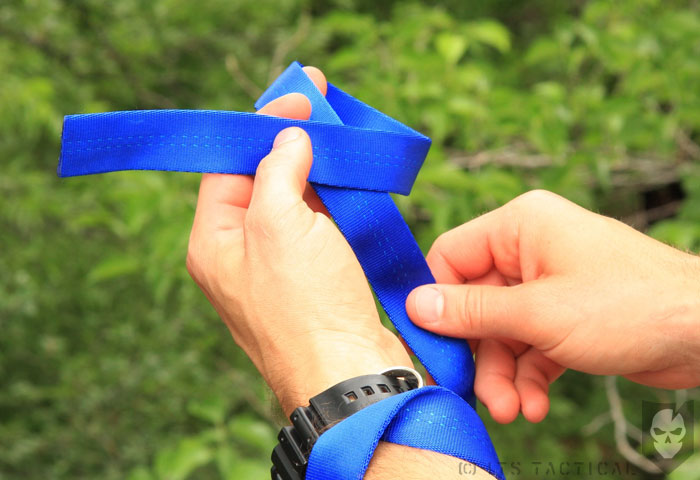
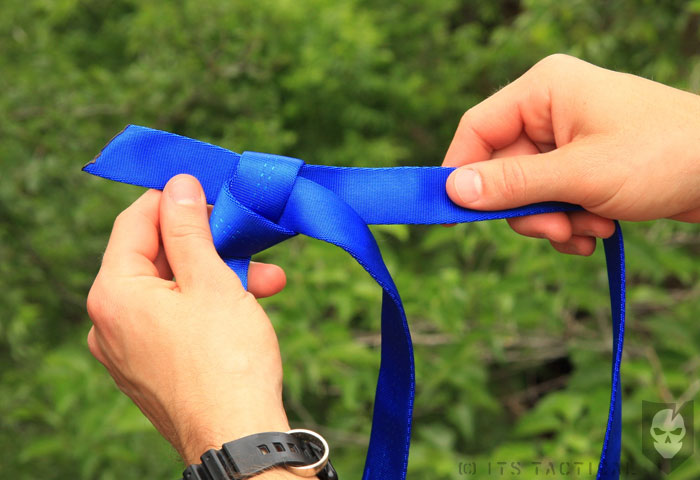
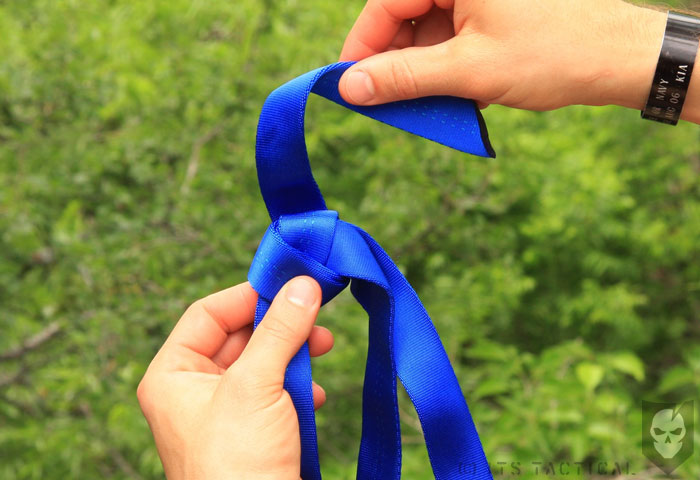
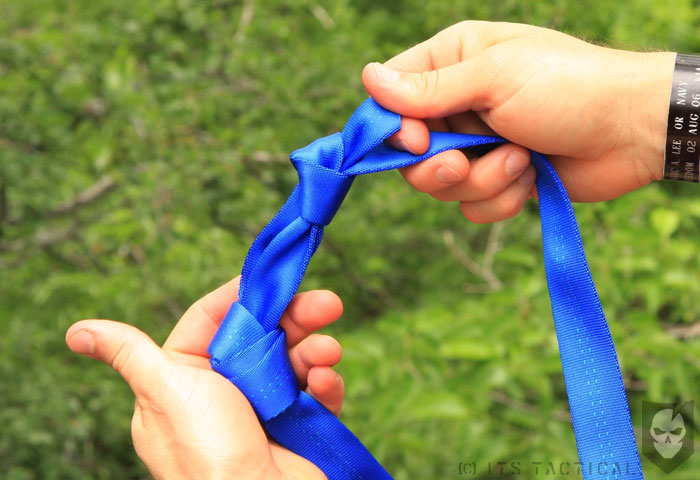
  1. Start with a simple overhand knot in the tubular webbing
  2. Ensure you leave at least an 8 inch tail on the working end
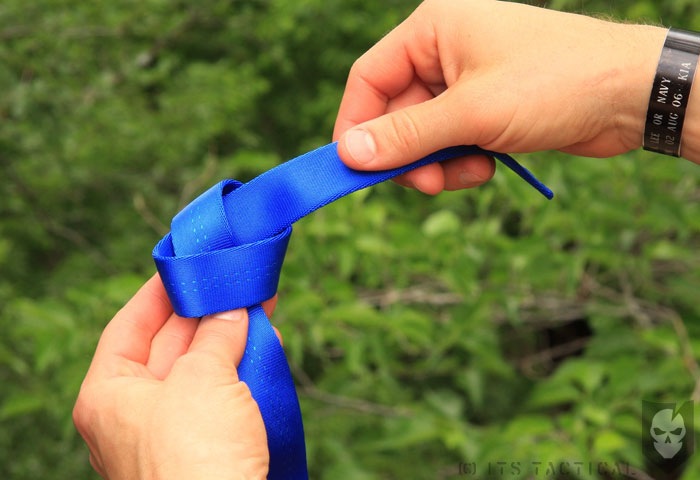
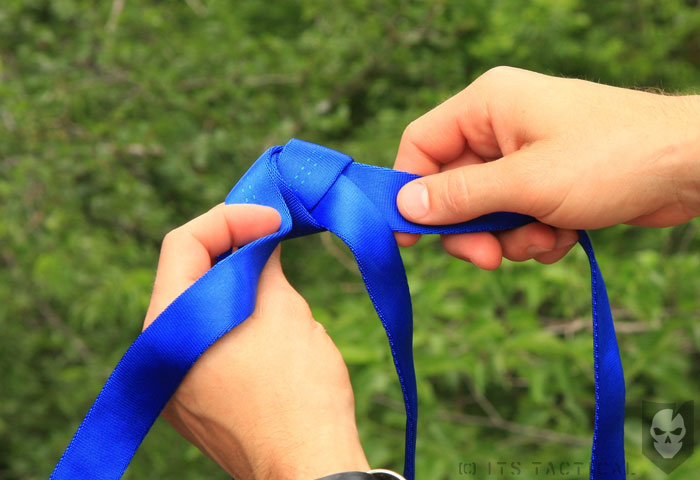
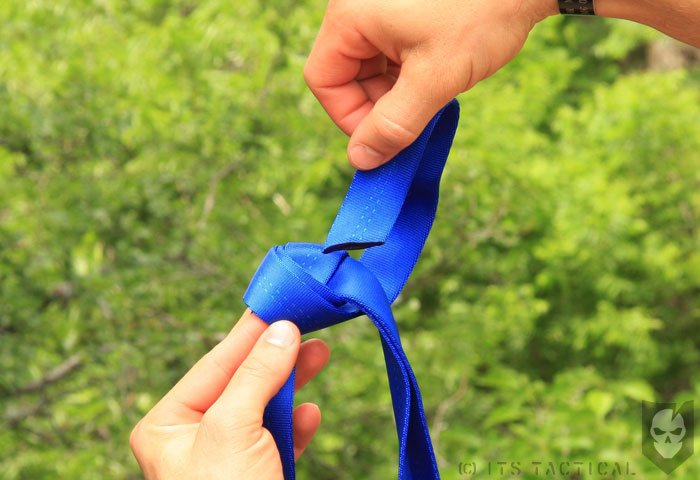
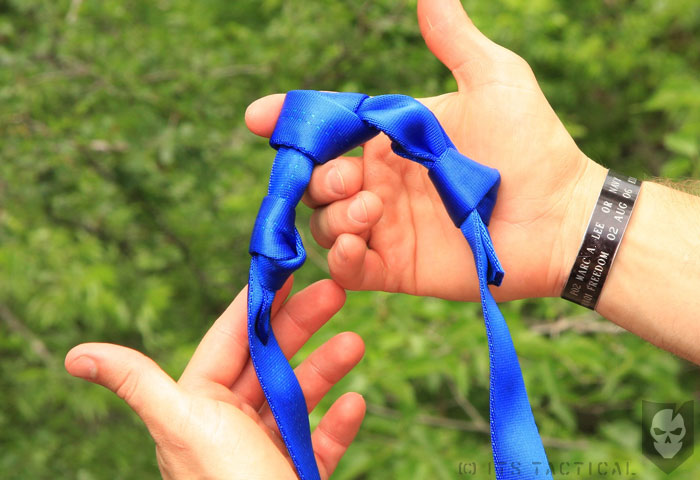
  3. Thread what was the standing end behind the working end
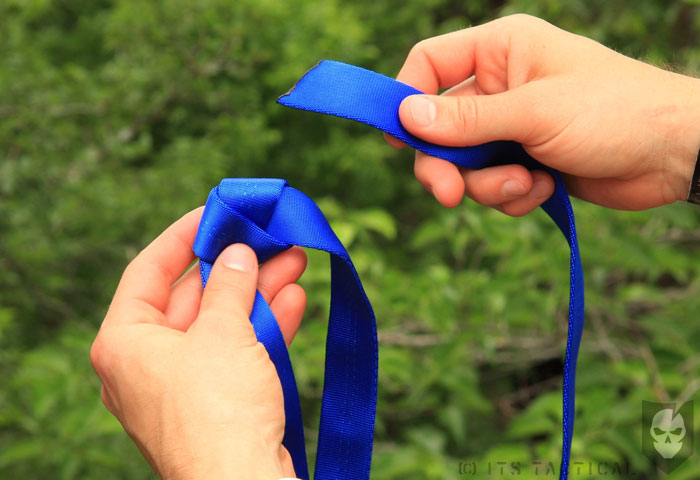
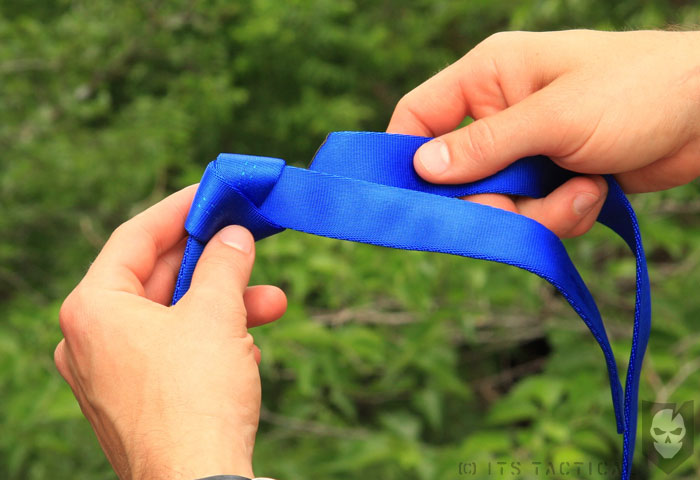
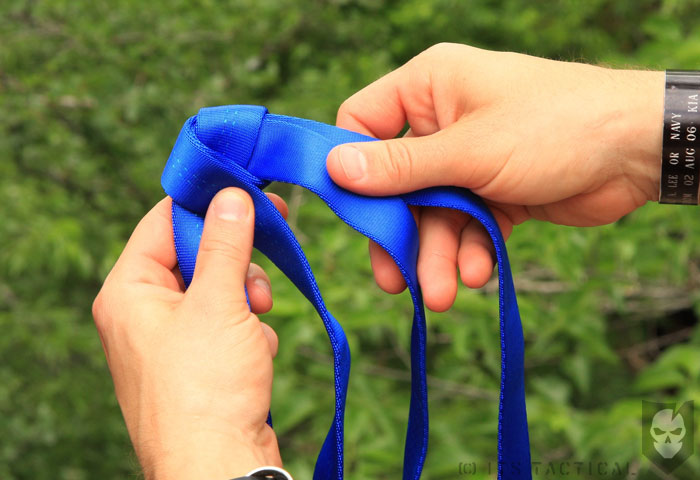
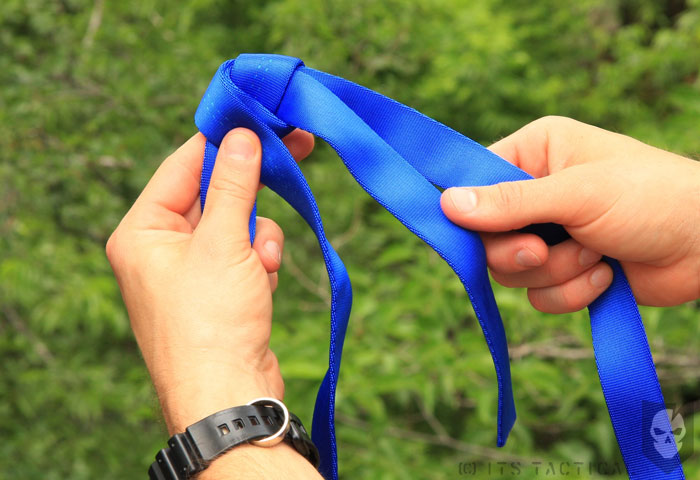
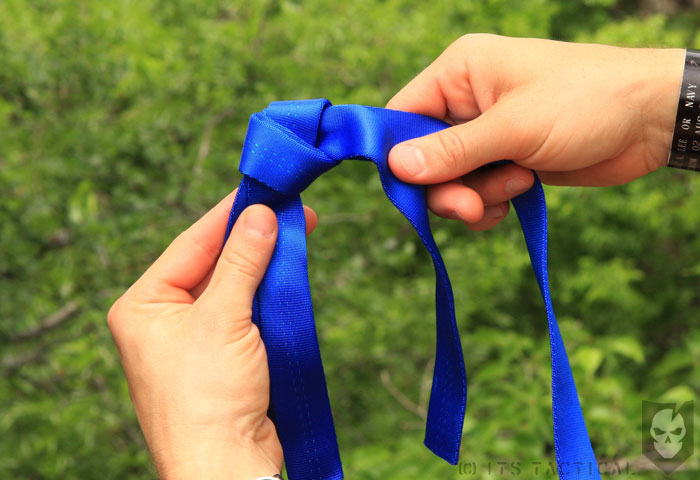
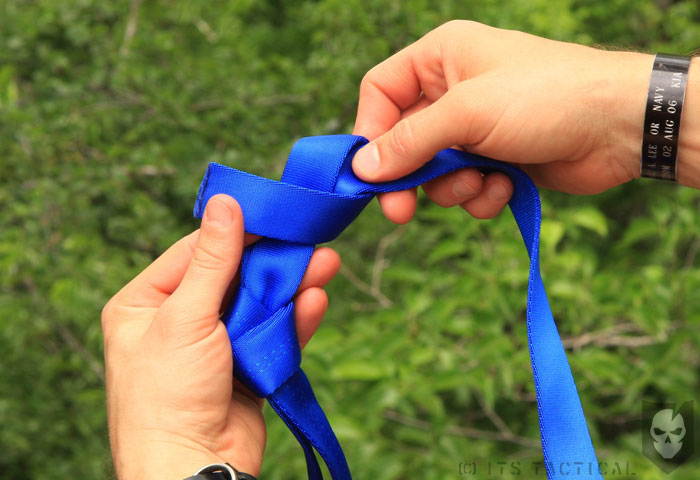
  4. Continue to trace the original knot ensuring the webbing is flat
  5. Ensure you wind up with equal tails at least 8 inches in length
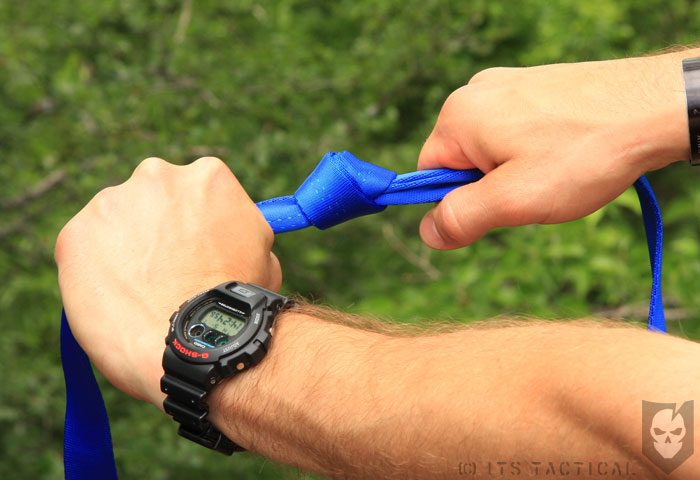
  6. Backup the knot with an overhand knot on each side of the tape knot

View the gallery below and follow along with the steps above!
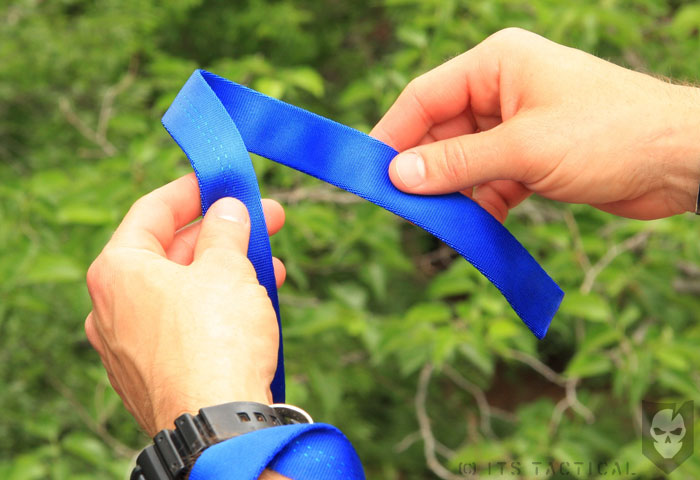
Tape Knot 01Tape Knot 02Tape Knot 03Tape Knot 04Tape Knot 06Tape Knot 07Tape Knot 08Tape Knot 05Tape Knot 09Tape Knot 10Tape Knot 11Tape Knot 12Tape Knot 13Tape Knot 14Tape Knot 15Tape Knot 16

Check back next week as we continue our Knot of the Week mini-series with the Figure Eight Knot

email
share

Are you getting more than 14¢ of value per day from ITS Tactical?

Become a Crew Leader!

Please consider joining our Crew Leader Membership and our growing community of supporters.

At ITS Tactical we’re working hard every day to provide different methods, ideas and knowledge that could one day save your life. Instead of simply asking for your support with donations, we’ve developed a membership to allow our readers to support what we do and allow us to give you back something in return.

For less than 14¢ a day you can help contribute directly to our content, and join our growing community of supporters who have directly influenced what we’ve been able to accomplish and where we’re headed.

Click here to learn about all the benefits and Join!

{ 4 comments… read them below or add oneDiscuss in our Forum }

Mike Pollock June 27, 2010 at 9:10 pm
Thumb up Thumb down 0

I think another name for this is the “water knot”

Reply

Hiya, found this while googling to find instructions for the water knot. This does not appear to be a water knot as they usually end up as a right angle (as in there is a 45 degree angle between entry and exit on either side). (References: Storm Response, Urban Search and Rescue training, New Zealand)

Reply

I apologise,I made this call only after looking at the final knot in which it is being pulled tight therefore distorting the knot. Please delete my post

Reply

9 years of rope rescue, never heard this called a tape knot. How does this differ from a water knot aside from the safety knots? I’ve always known this as a water knot. Great photos though.

Reply

« Previous post

Next post »