



Rigging to Rappel: A Basic Guide
Rigging to rappel is an often undervalued skill. It is certainly a necessary part of rappelling, but most people I... View Article
View ArticleWe know you guys have been eagerly awaiting our Camo Comparision II results, and today we’ll be releasing our preliminary comparison images.
We’re asking for your help to cast your vote on which four patterns you find to be the most effective in the terrain locations below.
As there are close to 200 images contained below, we need to narrow them down into the four most visually effective patterns before we release the further analysis on each of those respective patterns. If you remember from our previous article on Target Detection and Identification, there are many other ways to analyze a pattern other than what the naked eye sees.
Without further adieu, we present our preliminary Camo Comparison II images and look forward to your feedback. Please cast your votes in the polls at the end of each location.
We were able to wrap up our 2nd Camo Comparison in a matter of one day (19 Jul 10) at Big Bend National Park in Texas, which was the closest location to us that we felt simulated Afghanistan terrain. While the entire trip took three days, we started our 10-hour drive early enough to use the first day to scout locations and make things easier on the day we shot the images. If you haven’t read the adventures we encountered along the way click here!
The comparison took place in four locations (Alpha, Bravo, Charlie, Delta) and four distances made possible by optical camera zoom. All photos were shot on a tripod with a Canon EOS 40d using a Canon EF-S 17-85mm f4-5.6 IS USM. We tried to shoot as close to f16 as possible, which we’ve found to be the sweet spot for focus and depth of field on this particular lens.
50mm is closest to what the eye sees naturally and is represented by Distance 3 in each location. Distance 1 was an extreme wide angle at 17mm, Distance 2 was a wide angle at 30mm, and Distance 4 was a medium telephoto at 85mm. While we kept the optical zoom levels consistent, the distance we were shooting from varied in each location as described below. Details on each location such as time, date and GPS coordinates are also shown below.
In each set you’ll first see our control image, which is a shot of the white mannequin we used sans camouflage.
Each of the 12 camouflage patterns was placed on a torso mannequin and each location was completed in a matter of just 20-30 minutes. This was to ensure that the lighting was realitively the same for each image. Full sun was the best description of the shooting conditions.
The white balance for the photos was custom set using an 18% Grey Card in each location. The photos have not been altered in any way by Photoshop or any other editing program and do not include our watermark. They have been resized to 1024 x 1024 though.
Larger images are available on our Flickr Account but are copyrighted and not free to use without permission. For more specifics on our images you can view the properties on each individual image on Flickr. Please contact if you need high-resolution use of our images.
What’s also great about Flickr is that you can view our sets as a slideshow. If you click the first image in the sets below, it will bring up a viewer that will allow you to easily move to the next picture by clicking on the arrow that will be visible when hovering on the right side of the image. This should be just as easy as the Flickr slideshow.
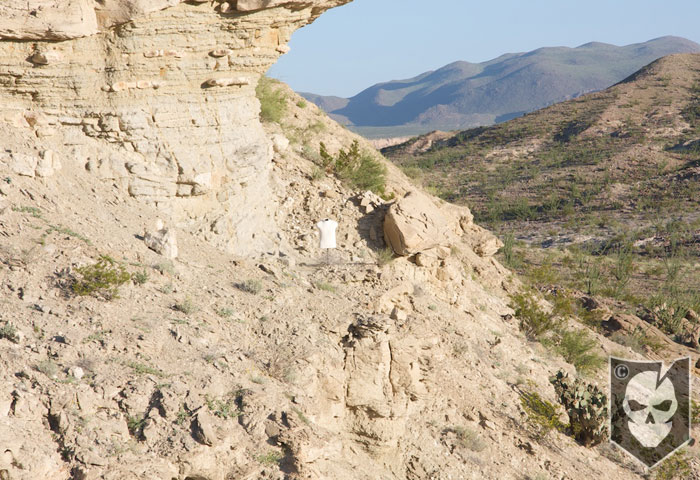
In Location Alpha we tried to find a mountainous terrain that closely resembled the mountains of Afghanistan. The camera baseline distance was set at approx. 100 yards away, thus distance three would be the closest to what the eye would truly see. Location Alpha was shot on 19 July from 0800 to 0830. GPS Coordinates: 29 25.523 -103 08.551
Please cast your vote on which four patterns you find to be the most effective at the end of each terrain location. The polls will allow four (4) multiple choice selections.
Distance 1
Distance 2
Distance 3
Distance 4
Poll
[polldaddy poll=3573361]
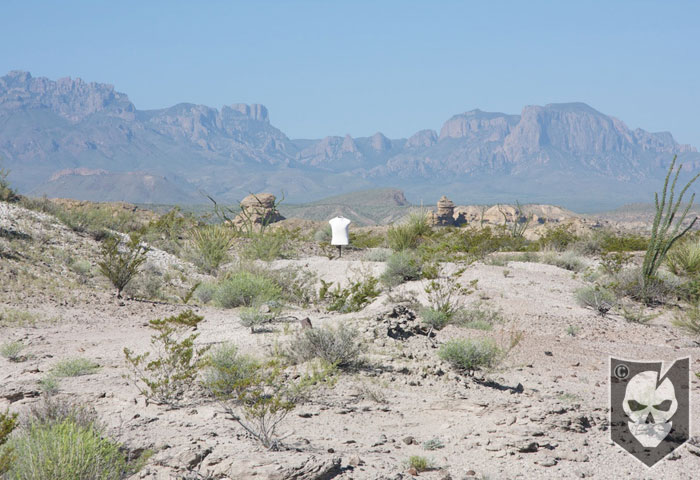
In Location Bravo we attempted to simulate a plains area with a mountainous background. The camera baseline distance was set at approx. 50 yards away, thus distance three would be the closest to what the eye would truly see. Location Bravo was shot on 19 July from 0945 to 1015. GPS Coordinates: 29 25.145 -103 08.255
Please cast your vote on which four patterns you find to be the most effective at the end of each terrain location. The polls will allow four (4) multiple choice selections.
Distance 1
Distance 2
Distance 3
Distance 4
Poll
[polldaddy poll=3573369]
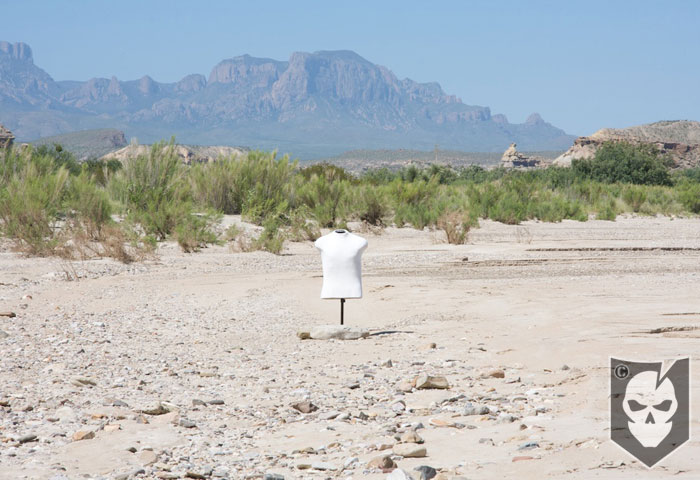
In Location Charlie we tried to find a terrain that resembled a wash. The camera baseline distance was set at approx. 25 yards away, thus distance three would be the closest to what the eye would truly see. Location Charlie was shot on 19 July from 1115 to 1145. GPS Coordinates: 29 25.059 -103 08.464
Please cast your vote on which four patterns you find to be the most effective at the end of each terrain location. The polls will allow four (4) multiple choice selections.
Distance 1
Distance 2
Distance 3
Distance 4
Poll
[polldaddy poll=3573379]
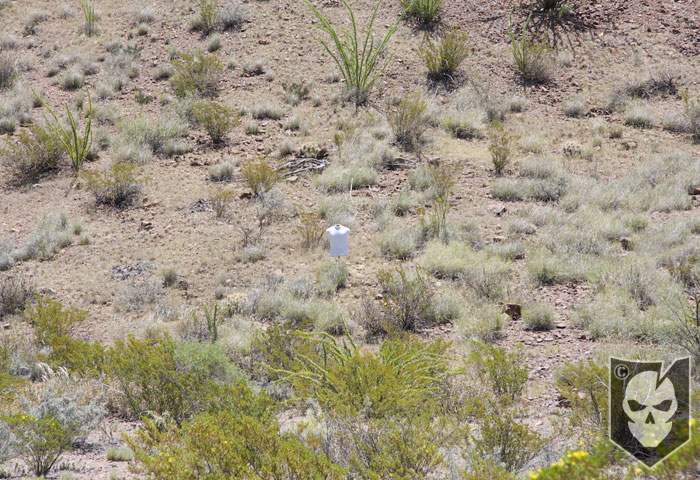
In Location Delta we tried to find an area that resembled a valley or grazing area. We fell this location is very important to the overall comparison, as it specifically shows what strong shadows from directly overhead sun do to camouflage. The camera baseline distance was set at approx. 75 yards away, thus distance three would be the closest to what the eye would truly see. Location Delta was shot on 19 July from 1300 to 1330. GPS Coordinates: 29 24.329 -103 08.501
Please cast your vote on which four patterns you find to be the most effective at the end of each terrain location. The polls will allow four (4) multiple choice selections.
Distance 1
Distance 2
Distance 3
Distance 4
Poll
[polldaddy poll=3573394]
We hope to continue to develop and refine our technique for comparing camouflage patterns and bring our readers the results. While this comparison was completed in just one day, there was a lot of coordinating, planning and driving that went into bringing you these results.
This wouldn’t of been possible if not for the support of our members and the camouflage companies like Bulldog Tactical, Digital Concealment Systems, and PenCott that graciously sent us uniforms to use in the comparison. The SAF Digital and Japanese Flecktarn were also donated by one of our Plank Owners, Eric Chevalier.
We’d like to thank our friend Jack from The Survival Podcast for his hard work and input on this project, as this wouldn’t have happened without him (and his truck). Also, a huge thank you to Riaan Rossouw for his continued support and advice in all things camouflage.
Stay tuned for further comparison using the four patterns that our readers choose!
Please consider joining our Crew Leader Membership and our growing community of supporters.
At ITS Tactical we’re working hard every day to provide different methods, ideas and knowledge that could one day save your life. Instead of simply asking for your support with donations, we’ve developed a membership to allow our readers to support what we do and allow us to give you back something in return.
For less than 14¢ a day you can help contribute directly to our content, and join our growing community of supporters who have directly influenced what we’ve been able to accomplish and where we’re headed.
Rigging to rappel is an often undervalued skill. It is certainly a necessary part of rappelling, but most people I... View Article
View Article
Go ahead and poke around, kick the tires, see what’s different. We’re very proud of the newly redesigned ITS and... View Article
View Article
We’ve got a pretty big announcement to share with you today and one that’s been hard to keep quiet about.... View Article
View Article
Peephole security is a real thing, especially when it comes to situations out of your control, like hotel rooms. It’s... View Article
View Article
Odds are you’ve seen a lot of Velcro hook and loop on a variety of things from garments, bags, hats,... View Article
View Article
I recently had the unique opportunity to visit Cooper, TX and interview Mike Ritland, a former Navy SEAL and founder... View Article
View Article
2 of 2 in the series U.S. SpiesU.S. SpiesU.S. Spies: Understanding the World’s Second Oldest ProfessionU.S. Spies: The Intelligence Cycle... View Article
View Article
In light of recent events, I’d like to go over my suggestions for the medical response to an improvised explosive... View Article
View ArticleIn light of recent events, I'd like to go over my suggestions for the medical response to an improvised explosive device expl...
Go ahead and poke around, kick the tires, see what's different. We're very proud of the newly redesigned ITS and have worked ...
I am a sovereign man, responsible for my own actions and their consequences. I am the supreme authority of my life, and I may...
4/2/13 Update: As most of you have figured out, this was an April Fools goof that we thought you'd enjoy. It also looks like ...
First off, this isn't a post about what the cause of the explosions were yesterday that rocked Boston, or a "here's what shou...
Rigging to rappel is an often undervalued skill. It is certainly a necessary part of rappelling, but most people I know rig q...
We've got a pretty big announcement to share with you today and one that's been hard to keep quiet about. For the past few mo...
Peephole security is a real thing, especially when it comes to situations out of your control, like hotel rooms. It's often ...
Ask any accomplished runner, hiker, backpacker, or outdoorsman how they prevent blisters and you'll more than likely get diff...
Odds are you've seen a lot of Velcro hook and loop on a variety of things from garments, bags, hats, morale patches and even ...
Editor-in-Chief's Note: Please join us in welcoming back former Navy SEAL and current Director of Training at Center Mass Gr...
See below for winner announcement. While Bryan and Kelly are out having a blast at the Overland Expo, the rest of us back...
Image via http://infothread.org - Click Image to Enlarge to View Sources
I recently had the unique opportunity to visit Cooper, TX and interview Mike Ritland, a former Navy SEAL and founder of the W...
Disclaimer: All names have been changed as to protect the identity of those involved. Sounds. There are many each of us ha...
When I first considered entering the intelligence community (“IC”), the notion of classic Cold War-style cloak and dagger esp...
Sugru is an interesting product that I've known about for a few years now, but it wasn't until recently that I picked some up...
In our How To Escape and Evade in an Urban Environment article, we briefly discussed escaping from zip ties. There are qui...
Editor-in-Chief's note: This post was written by Brett and Kate McKay and originally ran on The Art of Manliness. The ide...
We're proud to support our good friend and ITS Plank Owner, Karl, from OscarDelta by carrying their Go-Tubes in the ITS Store...
Lock Bumping is quickly becoming a popular way of bypassing a lock without the need for picking. The method uses a key blank ...
Close your eyes for a minute and join me on a little adventure... You're walking down the sidewalk and pass two shady figures...
One of the things that's sometimes hard to understand in Lock Picking is which pick to use. Many picks look similar and can...
If you've read our review of OnPoint Tactical's Urban Escape & Evasion Class and wanted to attend, now is your chance. ...
We've often talked about certain aspects of disappearing here at ITS, such as an untraceable cell phone and how to escape and...
I'll admit I'm a bit of an organizational freak, but my wife and those that know me would probably say that's an understateme...
I'm often asked what I do and I feel obligated to respond, “I could tell you, but then I'd have to kill you.” When people men...
Today we'll be looking at the 2nd part of our Inside Red Team Operations series, which takes us through the process of planni...
We wound up with some extra Carry The Load Morale Patches that we had made up for this year's event and we're giving you one ...
It's with disappointment that I write this post today, but with a strong stance on what ITS Tactical will tolerate from who w...
We just completed adding some awesomeness to the ITS Tactical Store a few minutes ago and are super excited to be offering ou...
There's just five more days to get your video response in on YouTube to win one of the three tremendous prize packages from R...
We'd like for all our readers to check out the new additions we've made to the ITS Forum, especially the newly created sponso...
There's a couple of things you should be doing today if you haven't already... Sending in your YouTube Video Response for ...
Today marks the start of a new series on ITS Tactical where we'll be walking you through the COMPLETE assembly of a Direct Ga...
We'd like to announce a special Crew Leader Membership sale good for only the first 15 people to sign up! Our yearly Crew ...
We have some very exciting news to share with you guys today! To mark our recent milestone of 2,500 YouTube subscribers, we'v...
Today in part four of our DIY AR-15 Build you'll learn how to install the Pivot Pin on your Lower Receiver and hopefully take...
Continuing our DIY AR-15 Build, today we'll be installing our Bravo Company 14.5" Barrel and Daniel Defense 9" Lite Rail onto...
Today in part five of our DIY AR-15 Build you'll learn how to install the Trigger Group in your Lower Receiver. The trigge...
If you haven't yet seen our newest advertiser, let us take a second and introduce you to Pimps n' Mercs before we get into th...
Welcome back to our DIY AR-15 Build and the start of our tutorials on assembling your Upper Receiver and finishing the build!...
Today in our fifth installment of the DIY AR-15 Build Upper, we'll be installing the Flash Hider. We won't technically be ins...
One of my personal goals for 2012 was to learn tubular lock picking and become proficient enough to share my knowledge with e...
Today in part eight of our DIY AR-15 Build we'll be showing you how to install the final part onto your Lower Receiver, the B...
An unfortunate turn of events has occurred surrounding the latest issue of RECOIL Magazine. Everyone at ITS HQ was ecstatic w...
Today we'll be showing how to pick your way out of Handcuffs using only a bobby pin. We realize this may be a sensitive issu...
Whether you consider yourself a novice or pro when it comes to lock picking, there's no denying that everyone needs to keep u...
Today in part six of our DIY AR-15 Build you'll learn how to install an Ambidextrous Safety Selector and Pistol Grip in your ...
Today in part seven of our DIY AR-15 Build you'll learn how to install a Magpul MOE Trigger Guard into your Lower Receiver. ...
I am a sovereign man, responsible for my own actions and their consequences. I am the supreme authority of my... View Article
4/2/13 Update: As most of you have figured out, this was an April Fools goof that we thought you’d enjoy.... View Article
First off, this isn’t a post about what the cause of the explosions were yesterday that rocked Boston, or a... View Article
Ask any accomplished runner, hiker, backpacker, or outdoorsman how they prevent blisters and you’ll more than likely get different answers... View Article
In light of recent events, I’d like to go over my suggestions for the medical response to an improvised explosive... View Article
See below for winner announcement. While Bryan and Kelly are out having a blast at the Overland Expo, the rest... View Article
Editor-in-Chief’s Note: Please join us in welcoming back former Navy SEAL and current Director of Training at Center Mass Group,... View Article
Disclaimer: All names have been changed as to protect the identity of those involved. Sounds. There are many each of... View Article
We’re proud to support our good friend and ITS Plank Owner, Karl, from OscarDelta by carrying their Go-Tubes in the... View Article
Control Console for Project Manhigh
“The U.S. Air Force established PROJECT MANHIGH in December 1955 to obtain scientific data on the behavior of a balloon in an environment above 99 percent of the earth’s atmosphere. It also investigated cosmic rays and their effects on humans. The program consisted of three balloons flights to the edge of space using this gondola.”
[Hi Res]
AH-1Z
HAL Light Combat Helicopter in digital camouflage.
48 Comments
For pure sand I think the 3 color Desert beats them all. But when ANY other color is introduced it’s Multicam all the way. The location Delta test wasn’t to effective though as it was in shadow cast which defeated them all in that enviornment. The ATS would be a good second for me. but the magic of Crye is the mixture of disruptive patterns and hard-lined ones. ATS seems to be a mix between disruptive and digital. Just my hmble opinion. Good Job regardless!
delta was the hardest, due to the strong shadows. from a distance they pretty much all sucked. it’s amazing ,no matter which camo i saw they all stood out to me.
Exactly why we included the results madwest. Just like in our article on Visual Saliency, it shows how no matter what camouflage you have on, it’s truly up to the wearer to know how to effectively use it to their advantage.
Location Bravo was also affected by the strong shadow on the mannequin’s left side.
I was surprized at how well some of the older patterns stood up to the new stuff.
I was surprised that Mirage didn’t perform better. In vegetated areas I have seen it perform excellent even though it is meant for an arid environment. Cover and concealment techniques relating to the individual will always payoff. Breaking up outlines like the Israelis do with the helmet covers and surface/shine management are key. Maybe some tests with afghan blankets and single tone colors (browns,greens,grays) would be interesting to see.
Overall, I’d have to say it’s either ATACS or Multicam for the environments presented. The thing is, there’s no one that was great on all of them. Each environment had their winners and losers. But if I had to pick the most effective overall, I’d go with either ATACS or Multicam. I hate multicam, personally… So this isn’t biased. I was just impressed at how well it worked overall. It had drawbacks, but if I were picking a deployment camouflage, I’d have to narrow it down to a larger test between ATACS and MC.
Thanks for the project!
I’m partial to multicam, it blends in quite well in my environment (Alaskan forests/mountains/tundra). Crye makes some good but pricey gear.
Having said that, desert MARPAT did better than I expected. It’s great for that environment.
Justin
Awesome work, but have you considered making the poll “blind”? People tend to be biased towards whatever they think is best and have already invested money in. Obviously at close range it’s apparent which is which but not so much at longer distances.
This is a really good idea. I’d like to see how some patterns (multicam in particular) fair in a blind test. That said, I do agree with Steve H. Although I think multicam is highly overrated, it performed quite well in this test environment.
Desert Marpat and 3 color was imo the overall best camo. As a little note I had 1 vote on ATACS, 1 on UCP, none on Mirage or MC. The camo with a more of a WL touch all stood too much out.
I didn’t pick 4 options unless I though 4 deserved it.
Its just hard to beat Desert Marpat, Atacs did fairly well as well as Multicam, and Mirage. Choc Chip is a surprise, but yet it really isnt at the same time. Finally 3-color also did well it seems.
Thank you Bryan for the comparisons. Really appreciated.
It is unfortunate that some of the locations did cast some shadows but all of the patterns were subjected to the same shadow effects and yet there were still obvious winners and loosers as Bryan pointed out, camouflage is only half the story, the rest is up to the operator… but it’s intetresting to see that dispite how “advanced” some of the modern patterns are, some of the more “primative” traditional patterns certainly held their own…
Great work guys!
I am new in the Paintball world. And reading your comments opens my eye to the products I will carry in my on line store,.
Thank you
IMO the best are MARPAT Desert and DCU.
Secondary choices are
Multicam – a little too green
Mirage a little too dark/red
UCP too bright
A-TACSis just universal and I like it
3rd line are
Chocolate Chip Desert Camo and Desert Tiger Stripe – they work somehow, but if I would have choice, I would pick up something mentioned earlier.
MARPAT Woodland, SAF Digital, Japanese Flecktarn and PennCott Green Zone are mistakes in every presented location, since you also checked Desert MARPAT (no brain winner here) it’s sad that there is no PennCott for desert areas available yet.
Also it is sad that there won’t be commercially available Latvian cammo, it could work: http://strikehold.files.wordpress.com/2010/04/latvian-multi-terrain-digital.jpg
Wow this is the best camo comparison I’ve ever seen! There were some pictures where I couldn’t see anything. I feel like Waldo needs to pop up somewhere in these 200 images
Awesome work Bryan and Jack, I guess it shouldn’t be too much of a surprise that the Desert MARPAT and the 3-Color desert were so good considering you were in a desert. But it’s amazing what a difference a little vegetation can make; add in a strong shadow and the whole game changes.
Desert MARPAT was the overall winner with ATACS coming second. Would be nice to compare it to the new PenCott Badlands camo and the new Italian multi-environment Vegetacam. Would also be interesting to test some of the multi-environment Hyperstealth patterns.
Great job by all!
Fantastic work as always guys! Are you guys planning on doing anymore of these comparisons? If you are, I’d be more than happy to send over some Australian DPCU and DPDU
Gillies,
Definitely planning on doing more and would love to include AUSCAM, shoot us an email and we’ll work out the specifics. Thanks for your support!
I just wanted to add one more point…
I really appreciate the work that has gone into this camo comparison (I am developing my own pattern and Riaan has given me a lot of help with the technical aspect and understanding his high standards, I too am having to do similar evaluations). So I feel bad about being
the guy that casts a shadow over the validity of the test but one of the reasons for the test in the first place was to address the fact that the patterns originally selected for Afghinstan were based on cliche perceptions of the terrain, and experience operating in the wide
spectrum of the Afgan terrain has proven those patterns less than ideal which created a lot of cntroversy and in turn spawened a lot of competitiion in the camouflgae industry resulting in numerous new “multi-environmental” patterns.
So environments were selected that were considered similar to Afghan terrain but the interesting thing is that the “multi environmental” patterns aren’t doing as well as we would expect yet the environment specific desert patterns are doing very well…
Over the last few years the internet has been flooded with photos of soldiers in Afghanitan wearing desert patterns set against a suprisingly green backdrop to draw attention to the fact that these patterns are not appropriate for such terrain. After looking over the locations
for the comparisons it seems unfair to not have this kind of terrain represented. After all of the hard work that has gone into this test it would be a shame to conclude that Afghanistan is a desert and the desert specific patterns are the most effective for such an environment
which would contradict the point of the comparison in the first place.
I’ll attempt to be as diplomatic with my response as I can be, but when you call into question the “validity of the (comparison, not test),” I have to question your motives. Especially when you’re developing your own Camouflage pattern.
We have no motive with our comparison other than to show people our results. We’re not employed by any Camouflage Company, nor are we developing our own. This is a 100% unbiased test of the patterns we could allocate for the comparison.
The environments we selected were based on exhaustive research in pouring over images that were sent to us by guys downrange, and what we could find scouring the internet. I’m not sure how “green” an environment needs to be to simulate Afghanistan, but I feel we hit it pretty good. Is it a perfect match? Of course not, this isn’t Afghanistan, and this we can’t afford to send a camera crew there.
Just because the multi-environment camouflage patterns haven’t been rated as highly as other patterns doesn’t mean anything more than that’s what readers feel is best for the terrain in the photos. Period.
Our Camouflage Comparisons are continually evolving, and each one is getting better as we go along. Your feedback is appreciated and we’ll take it into consideration on our next one, but for you to assume that this comparison concludes that Afghanistan is a desert is just ridiculous.
~ Bryan
Hi Brian,
After reading you response then reading my post back I can see why I have offended you and I apologise.
I certainly don’t have any motives as you I have no vested intrest in the comparison other that seening how well the patterns you are comparing stack up to one another. The point I was hoping to make was a similar point discussed on strikehold : http://strikehold.wordpress.com/2009/08/10/afghan-camo-the-british-controversy/. I noticed that although the locations selected were fairly diverse, the placement of the patterns was typically against sand so of course the desert patterns will do very well.
Again I apologise for the way I articulatd my last post.
Look man, there’s no reason to apologize and you said what you said. I’m not going to deny there’s green in Afghanistan just like you can’t deny there’s green in our Camo Comparison.
If you take a look at the satellite image from that map you’ll see exactly what percentage of that area is “lush” with vegetation, a small one. This is exactly why it’s hard to have a true “multi-environment” camouflage in Afghanistan.
You’ll need to go back and look at our photos again because the “typical” terrain they were against was not sand.
I appreciate the follow up,
~ Bryan
Not to jump in but I was looking at the pics again and feel locations Bravo and Delta show a good mix of color.
Since I’ve never been to Afghanistan myself the most logical thing to do was a Google Image Search for “Afghanistan” and the pics I come up with are actually pretty darn close to the locations in this camo comparison.
Do the search yourself! http://www.google.com
To jump in:
The pictures of the test locations look pretty accurate for the parts of Afghanistan I saw. Until two months ago I was in a more desertlike part of the helmand river valley just a few kilometers to the southeast of Marjeh (and went into Marjeh itself a few times).
Once spring came, yes, vegitation grew up, and the poppy fields and trees and bushes and such are quite green, and yes, we did stand out (In desert MARPAT FROGs, with coyote tan gear) in those specific locations. But it would have made very little sense for us to wear our greens instead, the locations of vegitation are the exception, not the norm, even in that lush, well-irrigated area. Maybe northern Afghanistan is different, but Helmand is definetly desert.
Universal camoflauge is an oxymoron. It’s a stretch to just have two patterns, but I’m pretty impressed with MARPAT.
Lastly, if I have to have gear that’s either too dark or too light for the environment, anyone who’s made a ghillie suit will tell you it’s better to start light and darken with local soil and vegitation.
Thanks for the work Bryan.
Great job guys!
One request – I wonder if you could put the pattern name in the image title, or a number that correlates to the pattern name on the voting box…I found myself counting a lot, and double checking to ensure I was voting on the right pattern/image.
Once again, great info you have presented here. Clearly this comparison was not meant to cover all terrain types, and the locations you selected are VERY appropriate for what is found throughout the vast majority of Afghanistan.
Great job guys, really enjoyed this.
I actually think the shadows in location Delta provide some helpful feedback. After all, you aren’t trying to make the camo look good, you are trying to compare patterns in real environments.
Definitely helps separate the “tacti-cool” from the tactical.
Nicely done test, but I can’t help but feel that in some ways we were being asked to pick out uniforms based upon their reflectivity and not their patterns. I tried to pull back and take a blurry sort of look and what I noticed was that some uniforms stood out as too dark and some as too light for a particular terrain. In most series it came down to picking between one or two that best handled the relative light in the background. The patterns seemed to matter less than the light reflection quality of the garment.
Recently got back from the ‘green zone’ strip of relatively fertile Helmand valley, and I must say that Big Bend, or southern Colorado isn’t a bad representation at all. Some desert outposts are arid moonscapes, but other areas where we can win hearts and minds are the agricultural centers – up north it’s got to be a different story entirely – a purely desert pattern isn’t going to work for every application, but in a desert nothing works better.
I never found our MARPAT to be severely lacking, but outside the gravel on FOBs and COPs, I must reemphasize how much ACU wasn’t up to the task. The guys running Crye patterned gear actually blended in somewhat – didn’t see ATACS or other newer stuff, so this is a fantastic resource.
Remember, even though most stuff is still poo colored brown and can have a camouflage color to match, the tendency of ALL NATO forces is to roll up in huge tactical vehicles, and walk around with 3′ long sticks that are target indicator black.