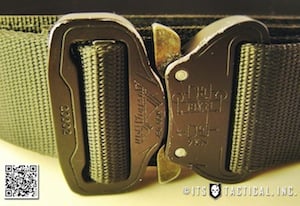
Today I’ll be taking a look at the Jones Tactical 2″ FatZombie Duty Belt. The FatZombie is unique and is by far the best duty belt I’ve ever worn. My hope is that this article will help you make an informed decision if you decide to pull the trigger on a FatZombie.
I’ll be the first to admit that until recently, I just dealt with the duty belt I was issued and didn’t give it much thought. But like other equipment, there comes a time where it makes sense to switch to new material technology and design. If your agency is like mine, they go with the lowest bidder, which in our case is Uncle Mike’s. Not to knock Uncle Mike’s (they are made in the USA), but the belt I was issued 9 years ago was no different in material and technology than the Uncle Mike’s belt I was issued as an MP in the Army 17 years ago.
I guess you could argue, “why change something that works?” For some people this is perfectly fine, but for those that are reading this, evolving with equipment and training is a way of life.
I’ve enjoyed a bit of anonymity here at ITS Tactical over the last few years. Bryan and the ITS staff have been very supportive of my request to keep a lot of my personal information private. Those who know me, see that I use a pseudonym on Facebook and other social media sites. Those in Law Enforcement or other sensitive fields do this to keep their families safe.
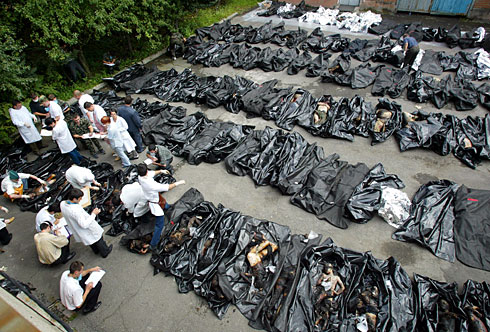
Today I’m going to step way outside of my comfort zone, as the murders that took place at the Sandy Hook Elementary School have hit me and my family very hard. [Read More…]
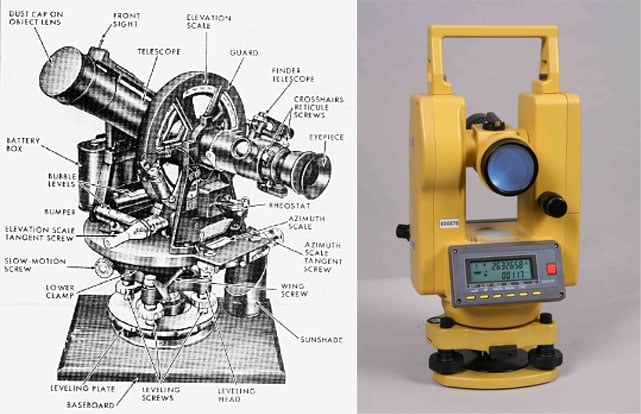
Undoubtedly you’ve seen those boxes with a telescope sticking out of the front used on construction sites and by road survey crews, but have you ever wondered what they were? I guess I never gave it much thought and hadn’t pondered using this type of equipment at home or work.
Those weird looking boxes that surveyors are looking through are called Theodolites and are used to measure vertical and horizontal angles. They’re also the instruments responsible for geodetic surveys since the 1800s. They tell you where you are and the location of what you are looking at (by measuring angles and using formulas.) I’ll stop right there and admit my math skills are horrible and I’m not going to pretend to know much about geometry.
This is where the magic of the iPhone jumps in and helps us knuckle-draggers out. The math voodoo is done for you and gives you quick, accurate information that you can now send via SMS message or email to all your co-workers and friends. [Read More…]
SKD Tactical recently contacted us about a new addition to the Patrol Incident Gear (PIG) line of products. My ears perk every time I hear about a new PIG product as I’m a huge fan of the PIG Plate Carrier and hydration carrier which I use at work.
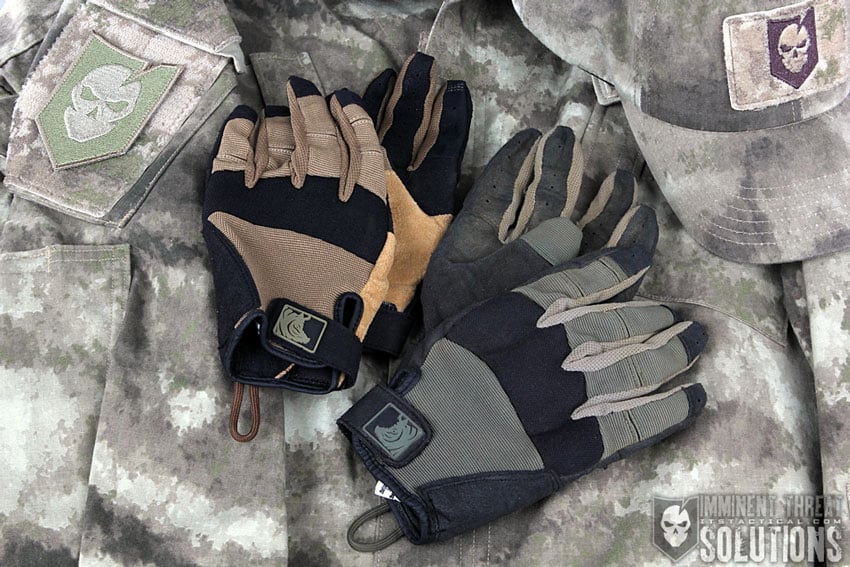
In addition to the Plate Carrier, hydration carrier, gRUNT modular pack, and other accessories they now have a line of gloves called the PIG Full Dexterity Tactical (FDT-Alpha) Glove.
Why add another set of gloves to the market? Well read on my friends as it will make total sense. [Read More…]
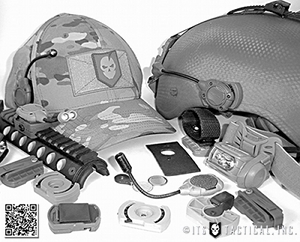
It seems I’m always on the lookout for new flashlights and lighting systems. I’ve been working on our evening shift for the last eight years and having a good flashlight is a must. Looking back at my time in the Army I often wonder how I got by with the issued “GI” flashlight. That thing was terrible!
Fast forward to today and I’ve been very happy with my Stinger DS LED as a duty light (the low light feature is great to have), but the issue I’ve always had is how to compliment a powerful duty light with a true low light option. The definition of true low light to me is a colored light with low output. Something that won’t kill your night vision but has enough juice to be workable.
For the longest time I was using a Stylus pen light and this was an OK option. I know a bunch of guys at work use those key fob type lights or carry a separate small flashlight. While all decent options, since being introduced to Princeton Tec at SOFIC last year I’ve found a great alternative. [Read More…]
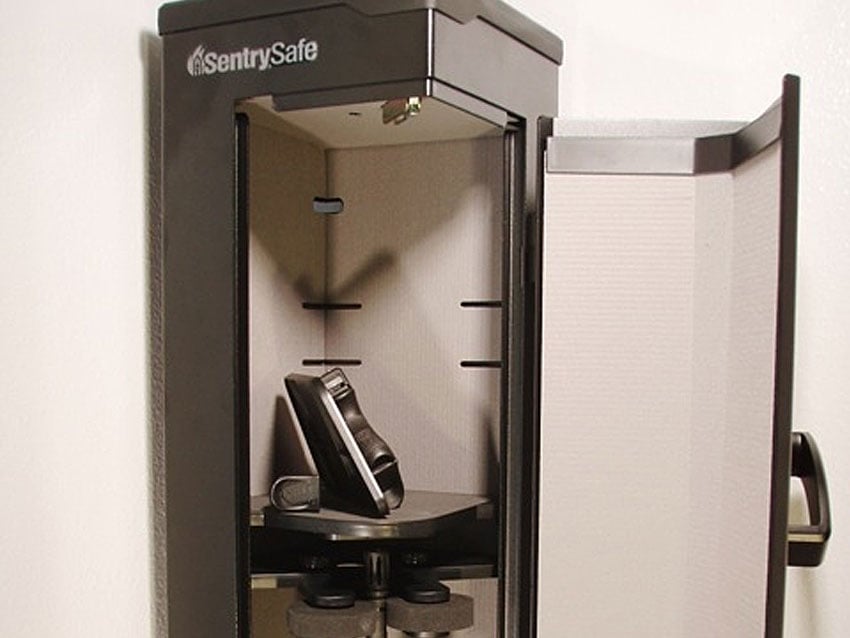
The history of “safes” goes back to the days of the caveman, when they attempted to keep their belongings safe from fire. Of course they didn’t have secure containers or locking devices to keep out unscrupulous cave folks. Those weren’t developed until the first “lock” that’s credited to the Egyptians. The Romans and Chinese created warded locks and the rest is history.
We wont go too in depth on the history of safes, but if you’re interested in early and mid 19th century American safes I found this website which has great information and some cool photos. For a entertaining read check out this blog post that talks about the “15 most impenetrable bank vaults”.
We’re stoked to be releasing two Travel Bugs into the Geocaching world. This is our first series of Travel Bugs and we hope you guys/gals will get involved with moving them through their missions.
If you’re not familiar with Geocaching or don’t know what travel bugs are please check out our Introduction to Geocaching article. Mike does a great job of giving you the basics about getting started. If you are a seasoned Geocacher then you know how much fun it can be to help travel bugs along their way.
Both Travel Bugs will be launched from the UDT/SEAL Museum in Ft Pierce Florida. We started a cache named In Memory Of Our Fallen (GC37M7X ), which is right outside the entrance to the Museum and also the inscription on the ITS Tactical brick at the UDT/SEAL Museum. [Read More…]
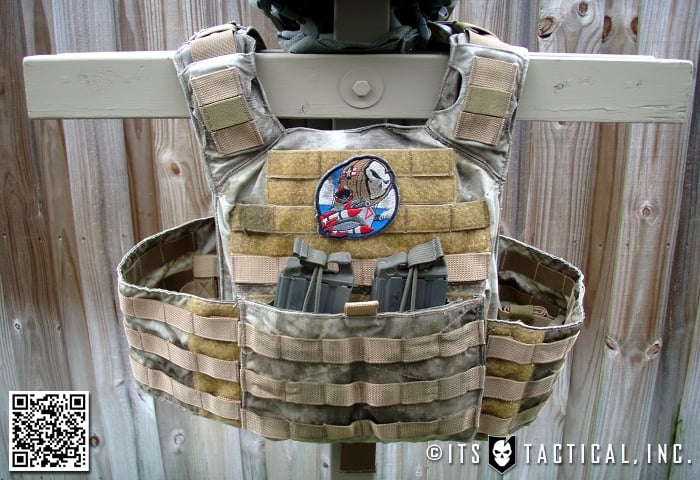
In the past few years I’ve noticed a big surge in the popularity of hard plate carriers. Not only for the military (those have been around for a while) but for law enforcement and even civilian use.
Trying to navigate through all the companies that are now producing plate carriers can be quite a feat these days. Just Google armor plate carries and you get blasted with acronyms like IOTV, CIRAS, PIG, LVAC, BOAR, RBAV, and PICO among a bunch of others.
Like computers and other electronic technology, light-emitting diodes (LEDs) have advanced over the past few years. I won’t attempt to explain how or why LEDs have advanced, as I’m not a electronics guy and couldn’t explain wavelengths, semiconductors, quantum wells, resistor calculations, radiant flux or any other jargon.
What I do know is the LEDs that were on my Commodore 64 were dim and everything these days is super bright. For me personally it’s just like shooting; I don’t need to know how much my bullets weigh or how many feet per second they’re flying. I just need to know how to pull the trigger and get rounds on target.
There are some people, like precision shooters and snipers, who need to know that technical bullet information. If you really want to learn about LEDs I would recommend Don’s Homepage or The LED Museum for detailed explanations on LED lighting. [Read More…]
So what do you with your old ballistic vest panels? If you have been in law enforcement or other occupation where you get a new vest roughly every 5 years, you probably have a couple of sets sitting around.
A few years ago I figured there had to be a way to use the panels I’d accumulated, as mine were sitting in the closet collecting dust.
Around that time I came across a video and photos of a Schertz Texas Police cruiser that had taken a bunch of rounds to the front from a AK-47. The article showed forensics photos of the trajectory the rounds took and had the officer been in the front seat he would have been killed.
Recent Comments